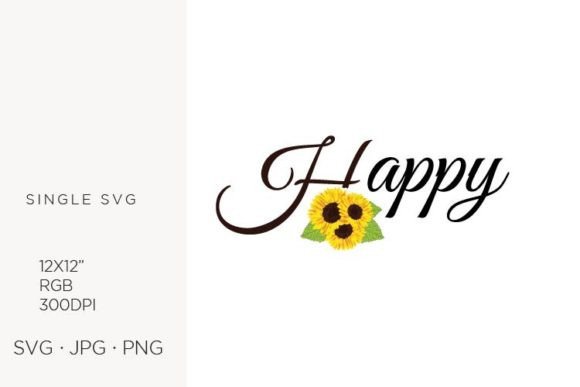
Sunflowers & Happy: Digital Art Guide
Digital creativity has evolved from a niche hobby into a fundamental tool for communication, branding, and personal expression. At the intersection of technical precision and artistic warmth lies a specific type of resource that serves multiple purposes: high-quality vector graphics featuring thematic elements like Sunflowers paired with uplifting typography such as the word Happy. This combination is not merely decorative; it is a versatile asset designed to bridge the gap between professional design standards and accessible DIY projects.
When you acquire a digital package containing these elements, you are getting more than just an image. You are receiving a suite of files optimized for different workflows. Typically, this includes a scalable SVG file, a high-resolution JPG, and a PNG with a transparent background, all rendered at 300 DPI in the RGB color palette. The source files are often crafted in industry-standard software like Adobe Illustrator, ensuring clean lines and editable paths. Understanding how to leverage these specific formats can transform how beginners, entrepreneurs, and educators approach their creative tasks.
Why Format Matters in Creative Workflows
The value of a digital asset is largely determined by its flexibility. For a graphic designer or a small business owner, the inclusion of an SVG file is critical. Unlike raster images, vectors do not lose quality when scaled. This means the same sunflower design can be shrunk down for a business card or blown up for a large wall mural without pixelation. The 12x12 inch artboard size provides a square canvas that is particularly useful for social media posts, album covers, and printable craft templates.
Conversely, the JPG and PNG files at 300 DPI cater to those who need immediate usability without editing software. A blogger might drop the PNG directly into a website header, while a hobbyist might print the JPG for a home project. The transparent background of the PNG is especially valuable for layering designs over colored paper or complex web backgrounds, allowing the sunflower motif to integrate seamlessly rather than sitting inside a white box.
Perspectives from Different Creators
Different users evaluate digital assets based on distinct priorities. What matters to a freelance marketer may differ significantly from what a classroom educator needs. Here is how various groups can utilize the Sunflowers and Happy artwork effectively.
For Entrepreneurs and Small Business Owners
For startups and local businesses, brand consistency and speed are paramount. A pre-made vector element allows for rapid prototyping of marketing materials. Imagine a local bakery launching a summer promotion. They can use the sunflower graphic to create cohesive invitations, social media announcements, and even packaging labels. Because the file is vector-based, they can adjust the colors to match their brand palette precisely using any basic design tool. The commercial value here lies in the ability to produce professional-grade visuals without the overhead of hiring a custom illustrator for every minor campaign.
For Hobbyists and Craft Enthusiasts
The DIY community thrives on personalization. Crafters using cutting machines like Cricut or Silhouette rely heavily on SVG files. The clean paths in an Adobe Illustrator-created SVG ensure that the machine cuts smoothly without unnecessary nodes or errors. A hobbyist might use the Sunflowers design to create handmade greeting cards, vinyl decals for home decor, or iron-on transfers for tote bags. The word Happy adds an emotional layer, making these items perfect for gifts. For this audience, ease of use and compatibility with consumer-grade hardware are the primary decision factors.
For Educators and Content Creators
Teachers and bloggers often need engaging visuals that are legally safe to use and easy to modify. An educator might incorporate the sunflower imagery into classroom decorations or reward charts to create a warm, welcoming environment. The high resolution ensures that printed handouts look crisp. Meanwhile, a lifestyle blogger could use the transparent PNG to overlay on photos for Pinterest pins or Instagram stories. The positive connotation of the word Happy aligns well with content focused on wellness, gratitude, or seasonal updates. For these users, the reliability of the file quality and the aesthetic appeal are crucial.
Practical Applications Across Media
The versatility of this digital pack extends across both physical and digital realms. Understanding the specific strengths of each file type helps in choosing the right one for the job.
- Printed Paper Items: Use the 300 DPI JPG or PNG for high-quality prints such as stationery, invitation cards, and announcements. The RGB color profile ensures vibrant hues on modern digital printers.
- Web and Graphic Design: The SVG is ideal for websites and apps because it loads quickly and remains sharp on retina displays. It can be styled with CSS for interactive effects.
- Handmade Craft Items: The vector path allows for precise cutting of vinyl, paper, or fabric. This is essential for creating intricate party decor or detailed handmade cards.
- Logo Design: While pre-made elements should be used carefully in logos to ensure uniqueness, they can serve as excellent starting points or components for temporary campaign logos or event-specific branding.
Evaluating Quality and Long-Term Usefulness
When selecting digital assets, consider the long-term usefulness. A well-constructed vector file is an investment that pays dividends over time. Unlike a flat image that serves a single purpose, a vector can be repurposed indefinitely. You might start by using it for a summer sale flyer, then adapt it for a wedding invitation suite, and later use it for a website banner. The initial learning curve of understanding how to manipulate SVGs or manage layers in design software is outweighed by the flexibility gained.
Moreover, the technical specifications matter. Files created in Adobe Illustrator typically adhere to strict geometric standards. This means fewer anchor points, smoother curves, and easier editing. For professionals, this reduces cleanup time. For beginners, it means fewer frustrations when trying to resize or recolor elements. The inclusion of multiple formats ensures that regardless of your current skill level or software access, you can utilize the artwork immediately.
Making the Right Choice for Your Project
To determine if this type of digital artwork fits your needs, ask yourself a few practical questions. Do you need scalability for various print sizes? If yes, prioritize the SVG. Are you working primarily on social media or web platforms? The transparent PNG will save you time on background removal. Are you looking to create physical products for sale? Ensure you have the appropriate commercial license and use the high-resolution files for printing.
The combination of natural motifs like sunflowers with positive text offers a timeless appeal. It avoids trending styles that may date quickly, ensuring that your designs remain relevant. Whether you are designing a sophisticated brand identity or a heartfelt handmade gift, the key is matching the tool to the task. By understanding the capabilities of SVG, JPG, and PNG formats, you can unlock the full potential of your creative projects, ensuring that every output is polished, professional, and perfectly suited to its intended audience.